Commercial & industrialUpdated 19 May 202611 min read
Commercial lighting upgrades and the energy rules that travel with them
A cheap LED batten swap can still fail a certifier, an inspector and the people who have to live under the lights. This piece walks through NCC Section J in broad terms, emergency lighting, leftover fluorescent gear, and the paperwork a lighting job actually has to carry.
By Priya Nair
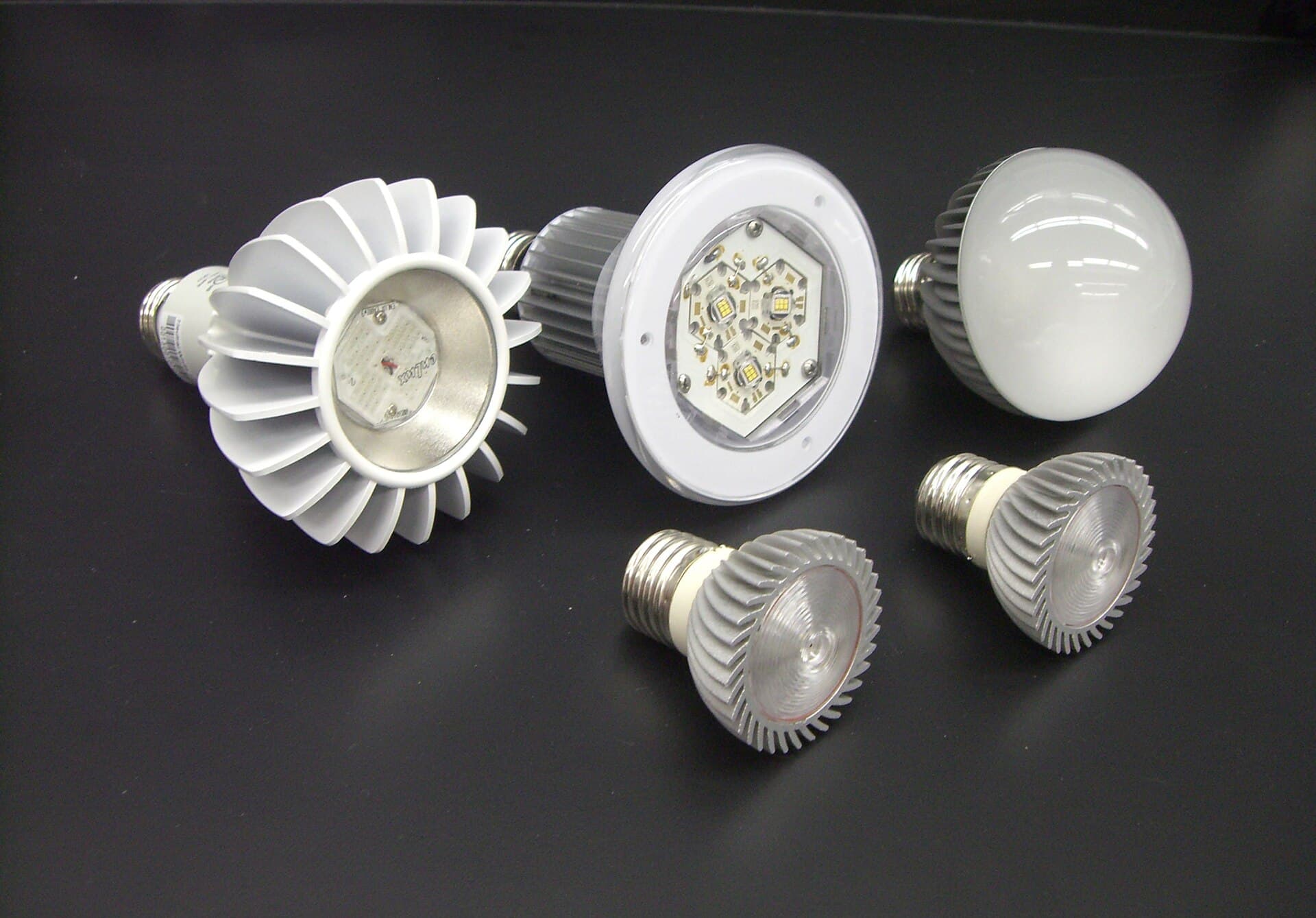
A lighting upgrade is the commercial job that looks simple from the car park. The fluoro battens are yellow, the landlord wants the power bill down, and a box of LED battens is sitting in a wholesaler’s aisle with a sticker that says “direct replacement”. Two days later the tenancy is brighter, the builder has been invoiced, and nobody has asked whether the emergency fittings still do what AS/NZS 2293 says they must do, whether Section J of the National Construction Code still cares about the space, or what is still hanging off the old circuit in the ceiling.
That is how a cheap LED battens job misses the point. The lamps are not the work. The work is the installation that remains after you leave, the energy rules that travel with a Class 5 or Class 6 building, and the certificate you put your licence number on.
This is a piece for contractors who already know how to terminate a batten. It is about the decisions that sit around that termination. For the wider commercial desk, start at the commercial and industrial hub.
Like-for-like is a claim, not a method
“Like-for-like” is a phrase that gets used to keep a lighting job out of a redesign. Sometimes that is honest. You take down a T8 batten, you put up an LED batten of similar output in the same hole, the switch stays where it is, the emergency fitting stays an emergency fitting, and the occupancy of the room has not changed. A building surveyor may treat that as maintenance.
The claim collapses as soon as any of the following is true.
The layout changes. You skip a row because the LED is brighter. You add fittings over a new joinery run. You move from battens to downlights. You change the way a warehouse aisle is lit because racking has moved.
The controls change. A space that was on a single switch is now on sensors, a time clock, or a DALI loop. After-hours lighting is split from the general lighting. A cleaners’ circuit appears, or disappears.
The use of the space changes. A storage room becomes a consult room. A back-of-house corridor becomes a public path of travel. A tenancy that was a travel agent becomes a dental surgery. Illuminance, glare and colour rendering are no longer the same conversation, even if the ceiling grid has not moved.
Emergency lighting is altered. You replace a maintained emergency batten with a cheap mains-only LED and “we will come back to the emergency later”. You leave an old inverter pack on a fitting that no longer has a fluorescent tube for it to run.
If any of those things are happening, you are not doing a lamp swap. You are doing a lighting alteration. Price it, document it and isolate it as one. The pricing piece is blunt about why a lump-sum “supply and install LEDs” line is how you donate Saturday to a variation you already did.
NCC Section J, in the terms a contractor can use
The National Construction Code’s energy provisions for commercial buildings live in Section J of Volume One. The clause numbers have been shuffled between editions. Watt-per-square-metre allowances, control requirements and the treatment of existing buildings are not numbers you should quote from memory or from a 2019 toolbox talk. Open the edition that the building surveyor is using for this job. If the job is in a jurisdiction that has adopted a later edition, that is the book.
What does not change, in broad terms, is the idea. Artificial lighting in a Class 2 to 9 building is not a free-for-all. The NCC cares about how much power the lighting uses for the floor area, how it is controlled, and whether you have left lights burning in empty rooms because that is how the old fluoro circuit was wired in 1994.
A contractor does not have to become an energy assessor. You do have to know when the job has left the world of like-for-like and entered the world where someone will ask for a lighting power density calculation, a control narrative, or evidence that the upgrade is not making the building worse. That someone is usually the building surveyor or the tenant’s consultant, not Energy Safe Victoria or the Electrical Safety Office. Electrical safety offices care whether the installation is safe and whether the worker was licensed. They are not the people who sign Section J.
Practical consequences on a typical small commercial upgrade:
Ask, in writing, which NCC edition applies and whether the surveyor wants a lighting schedule. If nobody can answer, stop treating the job as a simple swap.
Do not invent a “compliant” wattage by adding up nameplate watts on a box and dividing by the tenancy area you paced out. If a calculation is required, it belongs to the person who is certifying the energy side.
Controls are part of the energy story. Occupancy sensors, daylight sensors and time clocks are not extras you add if the client has budget left. On many jobs they are how the design meets the Code. They are also how you create new faults: sensors that drop the room to black while someone is still in the coolroom, or a time clock that kills an emergency maintained fitting it was never supposed to see.
Existing-building work is not automatically exempt from thinking. A refurbishment that touches lighting can drag the energy provisions along with it. The trigger is a building-control question. Get it answered before you order a pallet of battens.
Emergency lighting is not a decorative extra
Emergency lighting and exit signs sit under AS/NZS 2293. They also sit under the NCC’s fire and egress provisions. They do not sit under “we will do the white lights first”.
A fluorescent emergency batten is a fitting with a battery, a charger, a changeover arrangement and a classification. An LED batten with a two-pin plug on the end is not a substitute unless it is a listed emergency fitting with the classification the design called for. If you do not have the original design, you cannot assume the old fitting was over-specified. You also cannot assume a brighter LED in the same hole meets the illuminance on the path of travel.
Test switches, indicators and logbooks are part of the installation. If the building has a central test system, you need to know whether your new fittings will talk to it. If it is a single tenancy with a key switch in the switchboard, that switch still has to isolate the emergency fittings for test without killing the general lighting in a way that leaves the tenant in the dark every time someone leans on it.
Single-point emergency fittings have a finite battery life. A lighting upgrade is the moment to ask how old the batteries are. Reusing a ten-year-old inverter pack on a new LED head is how you fail the next six-monthly test and get the phone call at 6am.
Do not put emergency fittings on the same occupancy sensor as the general lighting unless the design says that is how it works. A sensor that switches the unswitched active is a defect, not a clever saving.
Residual fluorescent gear
The cheap job leaves the old ballast in the ceiling “because it is already disconnected”. It is not disconnected in any way that will make sense to the next person. It is a metal box with a capacitor, sometimes still with a functional earth, sitting on a grid that will be opened during the next data upgrade.
Pull the gear. Bag the tubes. Fluorescent lamps contain mercury. They are not general waste. Your state environment agency and the lamp recyclers have a path; use it. Older power-factor capacitors, particularly on very old magnetic-ballast fittings, deserve a cautious disposal conversation rather than a skip.
If the circuit was a loop-in at the fitting, removing the batten means you now own the continuity of the circuit. That is not a five-minute job in a ceiling that has been used as a cable dump since the first fitout. Budget for junction boxes, mechanical protection and a megger at the end, not for “they’re just battens”.
Watch the neutral. A shared lighting neutral that has been carrying three phases of fluorescent load will not necessarily enjoy a new set of switch-mode drivers. Check the board. Check the connections. If the tenancy is on a small commercial three-phase supply, a lighting upgrade is one of the moments when an unbalanced or poorly terminated neutral shows itself.
Controls, drivers and the things that flicker in month four
LED drivers are electronics. They fail with heat, with poor incoming voltage, and with cheap capacitors. A warehouse that is twenty degrees hotter at the roof than at the floor will cook a bargain driver. Specify a fitting that is rated for the ambient you actually have, not the ambient in the catalogue photograph.
Flicker and audible noise are not aesthetic complaints. They are why a tenant will refuse the last invoice. If you are putting LED on a dimmer that was bought for incandescent, or on a leading-edge hotel dimmer that has been in the wall since 2002, test one circuit before you do the floor.
DALI, Casambi, Clipsal C-Bus leftovers and a landlord’s building-management system can all exist in the same building. Trace the control before you cut it. A lighting upgrade that orphans a BMS input will be treated as your fault even if you never saw the BMS contractor.
Occupancy sensors need a walk-test at the hours the space is actually used. A sensor aimed at an air-conditioning diffuser will see the vanes and keep the lights on all night. A sensor behind a new display unit will turn the shop off while the owner is at the till.
Certificates, schedules and who is promising what
Electrical work on a lighting upgrade is still electrical work. It needs the certificate your state or territory requires — Certificate of Electrical Safety in Victoria, the equivalent compliance document in Queensland through the Electrical Safety Office, NSW Fair Trading’s certificate of compliance for electrical work, Building and Energy’s paperwork in Western Australia, and the matching forms in South Australia, Tasmania, the ACT and the Northern Territory. The name of the form is not the same everywhere. The obligation to certify prescribed work is.
That certificate says the work is electrically safe and complies with AS/NZS 3000 and the other standards you used. It does not say the tenancy now meets Section J. If a certifier wants a lighting schedule, give them a schedule: fitting type, location, circuit, emergency classification, control method, and the manufacturer’s datasheet. Keep a copy with the job file. The person who will look for it in three years is you, when the tenant’s lawyer asks why the north office is a cave.
If you used a lighting designer, name them on the file. If you did not, do not describe your own layout sketch as a “design certified to the NCC”. That sentence will be read back to you.
WHS still applies in the ceiling. Asbestos in old office tiles, live cables that were never in the as-builts, and work at height over a trading floor are not covered by a cheerful LED brochure. A SWMS that is actually about this work is more use than a generic “electrical installation” template.
What the cheap LED battens job misses
A list, because this is the conversation you have with the client before they accept the cheaper quote.
Emergency fittings treated as ordinary lights, or ordinary lights sold as emergency.
No test of the existing circuit insulation before the new drivers go on it.
Ballasts and tubes left in the ceiling.
A colour temperature that makes the deli look like a morgue, or the office look like a nightclub.
No thought to the switchboard: spare ways, RCD type, labelling, or a lighting circuit that is still on a rewirable fuse in a building that otherwise has RCDs.
No after-hours circuit, so the sensors turn the shop into a cave when a staff member is still cashing up.
A driver that is not rated for the roof space in January.
No record of what was removed, so the next contractor cannot tell a lighting cable from a forgotten smoke-alarm interconnect.
A price that assumed a clear ceiling and a friendly ladder, in a tenancy that has a live data tray, a wet fire service and a landlord who wants work done after 9pm.
If the client still wants the cheap job after you have written that list down, get the exclusions in the quote. A variation that starts “as discussed on site” is not an exclusion.
Lighting upgrade checklist
- Confirm the NCC edition the surveyor is using, and whether they want a lighting schedule or an energy assessment, before you order fittings.
- Identify every emergency and exit fitting. Do not replace one with a mains-only LED.
- Walk the controls: switches, sensors, time clocks, BMS, after-hours and cleaners’ circuits.
- Open the board. Note phases, RCD protection, labelling and whether the lighting neutrals are a mess.
- Test insulation resistance on the existing circuits before the new drivers go on.
- Price the ceiling as it is, including residual gear, junction boxes and waste disposal for tubes.
- Record fitting type, location, circuit and emergency classification as you go, not at the end of the week.
- Walk-test sensors at the hours the space is used. Adjust before practical completion.
- Issue the electrical certificate required in that state. Do not claim it covers Section J.
- Photograph the completed board and a typical fitting, and keep the datasheets with the job file.
A lighting upgrade done this way is slower than a batten-for-batten blitz. It is also the one you can stand behind when the certifier, the inspector or the tenant’s solicitor asks what you actually sold them.
Questions contractors ask
- Can I treat an LED batten swap as like-for-like and skip an energy assessment?
- Sometimes a one-for-one replacement of the same number of fittings in the same positions is accepted as a maintenance replacement, but that is a question for the building surveyor and the current NCC energy provisions, not a rule you invent on the van. The moment you change layout, controls, emergency classification or the way the space is used, you are in redesign territory.
- Do leftover fluorescent ballasts have to come out?
- If they are no longer part of the circuit they are junk in the ceiling and a future fault waiting for someone else. AS/NZS 3000 still wants a safe, identifiable installation. Capacitors, especially older ones, should be treated as waste with a disposal path, not left taped to a joist.
- Who signs the energy side of a lighting upgrade?
- You sign the electrical certificate of compliance required in your state or territory. A building certifier or energy assessor may need separate evidence that the design meets the NCC. Those are different signatures. Do not pretend one piece of paper covers both.