Contracting businessUpdated 24 June 202610 min read
Hiring and supervising electrical apprentices without losing the plot
An apprentice is not cheap labour with a training contract stapled to them. Supervision, a record of work, capstone, and a host employer who actually teaches are how you produce a licensed electrician — and how you keep one past third year.
By Priya Nair
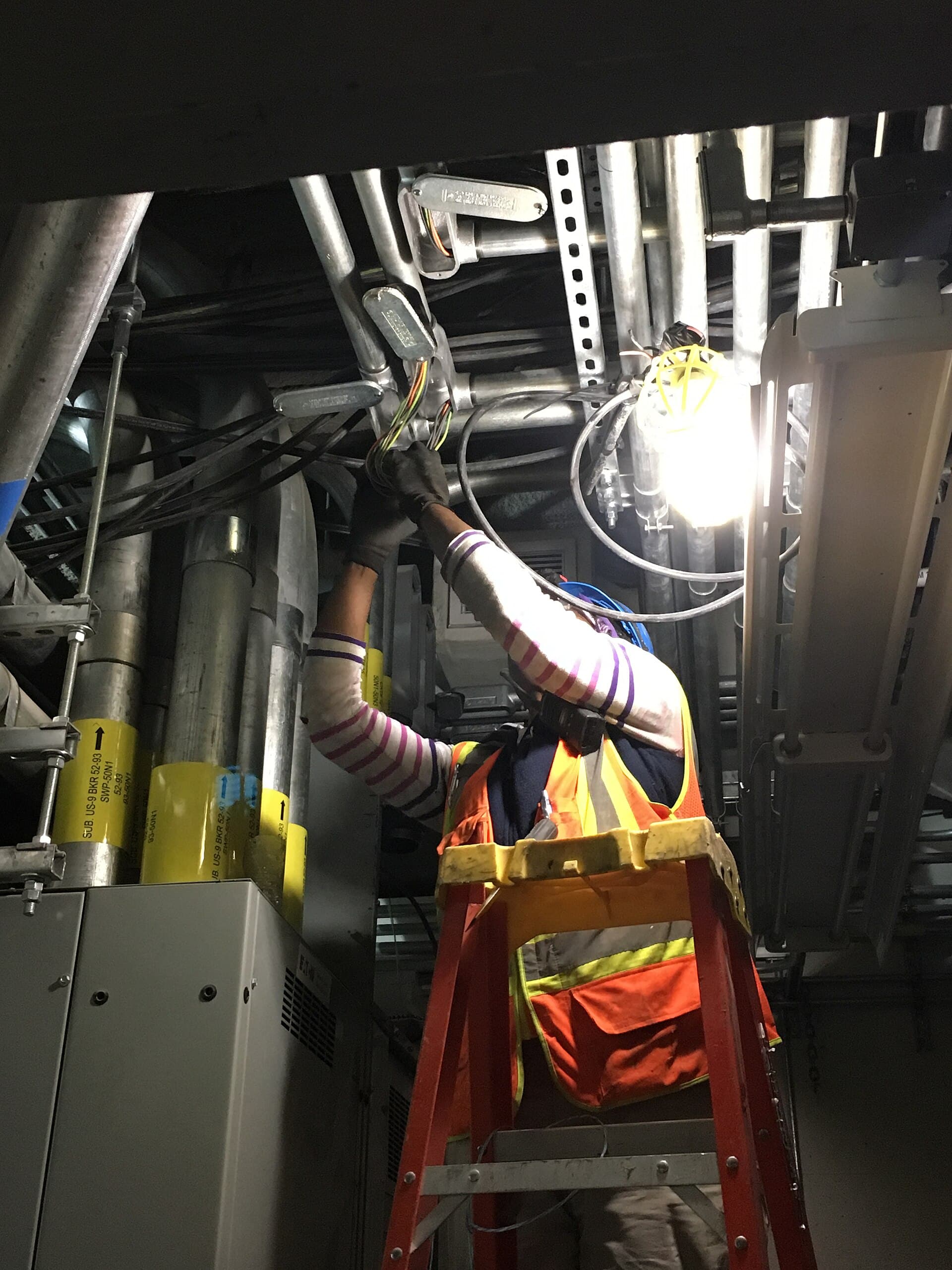
The apprentice is the longest job you will quote. Four years of supervision, block release, a record of work that is either honest or useless, and a capstone that will expose every shortcut you taught them. Firms that treat that as cheap labour lose the apprentice at third year, lose the licence lottery when the adult they trained walks, and sometimes lose their own contractor licence when a supervision failure becomes an incident.
This is a contracting-business problem with a WHS spine. The Wiring Rules do not have a junior version. The current that kills a tradesperson kills a first-year. The difference is the person standing next to them, and the work you have already decided they will not do alone.
Ratios and supervision rules are set by states and territories and by the training contract. They change. They are not reproduced here as a number you can tape to the van. Read the electrical safety office and the apprenticeship authority that cover the job: Energy Safe Victoria, the Electrical Safety Office in Queensland, NSW Fair Trading, Building and Energy in Western Australia, and their colleagues, plus the apprenticeship regulator that issued the contract. If you host for a group training organisation, read their supervision policy as well. The strictest applicable rule is the one you work to.
Supervision is a method, not a vibe
Direct, general and broad supervision are words that appear in state rules and in training packages. They describe how close you are, how competent the apprentice is for that task, and whether you can see the work. They do not describe a personality. A friendly leading hand who is in another room is not supervising.
Match the supervision to the task, not only to the year. A fourth-year who has never terminated a three-phase motor is a beginner at that task. A second-year who has pulled a kilometre of TPS under your eye is not a beginner at pulling TPS, and is still a beginner at isolation.
Be present for firsts. First live isolation. First MEN. First roof space. First ladder near a live bus. First conversation with a client who wants it done live. Those firsts are how people learn the habits you will later rely on. They are also how people get hurt if you skip them.
A SWMS that lists “apprentice to be supervised” and then puts the apprentice in a ceiling alone is a document for a file, not a control. Write the actual arrangement: who is the supervisor, where they will be, how the apprentice will stop and call.
Phones are not a supervision method. A message that says “megger it and send me a photo” is useful only after you have already taught them what a sensible reading looks like, and only for a task they are allowed to do.
What an apprentice must not do alone
State rules differ in the wording. The principles do not.
They must not perform unsupervised electrical work that their licence status and your supervision plan do not allow. An apprentice is not a licensed electrician. Some jurisdictions are explicit about live work, isolation, and work near exposed live parts. Even where the clause is quieter, WHS law and AS/NZS 4836 still require competence. A training contract is not competence.
They must not be the only person on a job that needs a licensed worker. “I’ll meet you there” is how a first-year ends up in a switchboard with a builder hovering.
They must not sign a certificate of compliance, or be asked to “just put my number on it”. That request is a reason to end a placement.
They must not be sent to “make it safe” after a storm, a flood, or a fire as if making-safe were unskilled. Making-safe is licensed work with a high consequence.
They must not be used as a human conduit through a ceiling while a tradesperson, somewhere else, assumes the circuit is dead.
They must not isolate a board, prove it dead, and authorise others to start, unless your state rules and your own assessment say they may — and even then, the responsible licensed person is you.
If you need a short sentence for the van: if you would not let them hold the contractor licence tomorrow, do not let them hold the risk today.
The licence landscape is the adult version of this conversation. Apprentices are travelling toward that document. Do not invent a shortcut that the electrical safety office will not recognise.
Ratios, in principles rather than folklore
People will tell you a number. “One for one.” “Two to one after third year.” “It’s fine, they’re nearly finished.” Some of those sentences have been true in some jurisdictions at some dates. None of them are a substitute for the current rule that applies to your workshop and your site.
Principles you can take to the yard:
Every apprentice on site has a named supervisor who knows they are the supervisor.
The supervisor’s own work must still allow them to supervise. Two apprentices on two roofs and one tradesperson in a trench is not a ratio; it is an absence.
Host sites inherit the same obligation as the employer. A builder who wants “just the apprentice, the tradesman is dear” is asking you to break the training contract.
Interstate work does not carry your home-state folklore with it. Check the jurisdiction you are standing in.
If the rule is silent on a situation, add a person, do not subtract one.
Keep a note of who supervised whom on a given day. If there is an incident, that note is not bureaucracy. It is the first thing an inspector will ask for.
Capstone, the RTO and the work they have not seen
Capstone — the final assessment that sits at the end of the Certificate III — is where an apprentice has to show they can do the work of an electrician without you standing in the light. If their record of work is a list of downlights and data points, capstone will find them out. So will their first week as a licensed worker.
Your job as employer or host is to give them the range: isolation and testing, a MEN they have installed and verified, a three-phase termination, a board they have dressed, a fault they have found with an instrument rather than with a hopeful swap, a conversation about AS/NZS 3000 that uses clause language. A one-van firm can still do this if the principal is deliberate. A larger firm can fail at it if every apprentice is parked on the same fit-out.
Talk to the RTO before the last six months. Ask what the apprentice is weak in. Believe the answer. Block release is not a holiday from teaching; it is the other half of the teaching. If you keep them on the tools through a block because a job is on fire, you are stealing from their licence.
Capstone is not a paperwork exercise you can “get them through”. An electrician who was walked through capstone and cannot isolate a board is a danger you have released onto other people’s sites. Do not be that employer.
Host employers and group training
Group training organisations employ apprentices and place them with hosts. The model exists because small shops cannot always offer four years of range, and because apprentices deserve continuity if a host folds.
If you host, you are not renting a pair of hands. You are taking on supervision, WHS, and a slice of the teaching. The GTO should give you a training plan and a supervision expectation. If they do not, ask. If they still do not, you are the only adult in the arrangement.
Rotate the work. A host who only ever has solar installs, or only ever has first-fix apartments, should say so and make sure the GTO plans the rest of the range elsewhere. Hiding an apprentice in one kind of job for two years is how you produce a specialist who fails a general assessment.
Pay attention to the culture they walk into. Hosts who use apprentices as the butt of the joke, or as the person who is sent under the house because they are small, should not be hosts. That is not softness. That is how you keep them in the trade.
If you employ directly, you own the whole contract: wages, TAFE days, the relationship with the apprenticeship authority, and the day they do not turn up. Direct employment is simpler to manage when it is going well and lonelier when it is not. Budget the admin. A missed training-plan review is how an apprentice stalls at the same unit for a year without anyone noticing.
Record of work, and the honesty it requires
The record of work — logbook, app, whatever the state and the RTO currently use — is evidence. If you sign it, you are saying the apprentice did that work under the supervision you describe. Signing a page you have not read is a lie that will sit beside your licence number.
Sit with them when you sign. Ask what they did. Correct the language if they have written “installed a board” for “watched me install a board”. Teach them that the record is how they will later prove competence for a licence, not how they fill a quota.
Keep your own note of the bigger jobs. When a reference is requested, you will want more than a feeling that they were “pretty good”.
Do not punish them for writing that they have not yet done a task. The empty line is the training plan. Fill it on purpose.
Wages, conditions and the figures you look up
Apprentice minimums sit in the modern award that covers your business, commonly the Electrical, Electronic and Communications Contracting Award for contracting shops, and in the Fair Work system. There are year-level rates, adult-apprentice rules, tool allowances, travel, and overtime. They change. This journal will not print a dollar figure and pretend it will still be true when you read this in a crib room in two years.
Look up the current award. Look up any state training award or additional instrument that applies. If you use a GTO, know what the apprentice is actually being paid so you are not the last to hear they cannot afford the fuel to reach your yard.
Superannuation, personal leave and the ordinary protections of employment apply to apprentices. They are not casuals with a textbook. A culture that “forgets” TAFE days or pays cash for Saturday is a culture that will not keep a good third-year.
Keeping them past third year
Third year is when they can do enough to feel useful and not yet enough to feel paid as an electrician. It is when other firms poach. It is when they look at the adult rate and do the arithmetic.
Keep them by teaching them the parts of the job that are still interesting: fault-finding, a clean board, a conversation with a client that is honest, a solar or commercial job if your book has one. Keep them by not using them as the person who only ever first-fixes. Keep them by paying at least the award and reviewing your above-award position before someone else does.
Tell them what the licence pathway looks like in your state — the application, the supervisor’s declaration, the capstone, the contractor licence if that is their aim — and help them collect the evidence. An employer who is useful at that moment is an employer they remember.
Tell them what you expect when they are licensed. Some will stay. Some should leave and come back later. A shop that pretends every apprentice will become a forever employee is a shop that takes the departure personally and then wonders why the next one is quiet.
If you cannot offer hours, range or decent supervision, do not hire. An apprentice is not a way to fill a van because you are tired. Hire a tradesperson, or say no to the work. A one-van principal who is already tired is a poor first supervisor.
Hiring and supervision checklist
- Read the current supervision and ratio rules for the state you are working in. Do not use a remembered number.
- Name a supervisor for every apprentice on every job. Write it down.
- Match supervision to the task, not only to the year level.
- List the work they must not do alone, including isolation and making-safe, and enforce it when a builder is watching.
- Plan the range they need for capstone: testing, MEN, three-phase, fault-finding, a board they have dressed.
- Sign the record of work as evidence, not as a courtesy. Sit with them when you sign.
- If you host, treat the GTO training plan as yours to deliver, not as their paperwork.
- Look up current Fair Work and award rates. Do not invent a wage.
- Protect TAFE and block release. A job that is on fire is not a reason to steal a licence.
- Talk about the licence pathway before third year, and decide honestly whether you can keep them.
The plot you lose, if you lose it, is this: you meant to train an electrician, and you produced a person who can pull cable and cannot say no to a live board. Supervision is how you refuse that outcome. The rest is wages, range and the humility to open the current rule instead of the one you learned when you were indentured.
Questions contractors ask
- Can I leave a late-stage apprentice to isolate a board on their own?
- Isolation is a licensed, competent person’s task. A training contract and a year-level do not, by themselves, make someone the person who proves a board dead. Follow your state’s supervision rules and AS/NZS 4836. If you would not let them sign the certificate, do not let them own the isolation.
- Who is the host employer, and why does it matter?
- If the apprentice is employed by a group training organisation, you are the host. You still owe them supervision, a safe workplace and a range of work. The GTO pays them and holds the training contract; you do not get to treat them as a labour hire unit with no teaching attached.
- Do I set apprentice wages myself?
- No. Minimum wages, allowances and overtime for employed apprentices sit in the relevant modern award and the Fair Work system — commonly the Electrical, Electronic and Communications Contracting Award for contracting shops. Those figures move. Look up the current instrument. Do not copy a number from a group chat.