Contracting businessUpdated 1 September 20269 min read
Running a one-van electrical business
A contractor licence, a van and a phone will take work. They will not, by themselves, make a business that can pay super, replace a stolen tester and still say no to a live board. This is the operating picture for a sole electrical contractor who wants to still like the trade in five years.
By Daniel Okonkwo
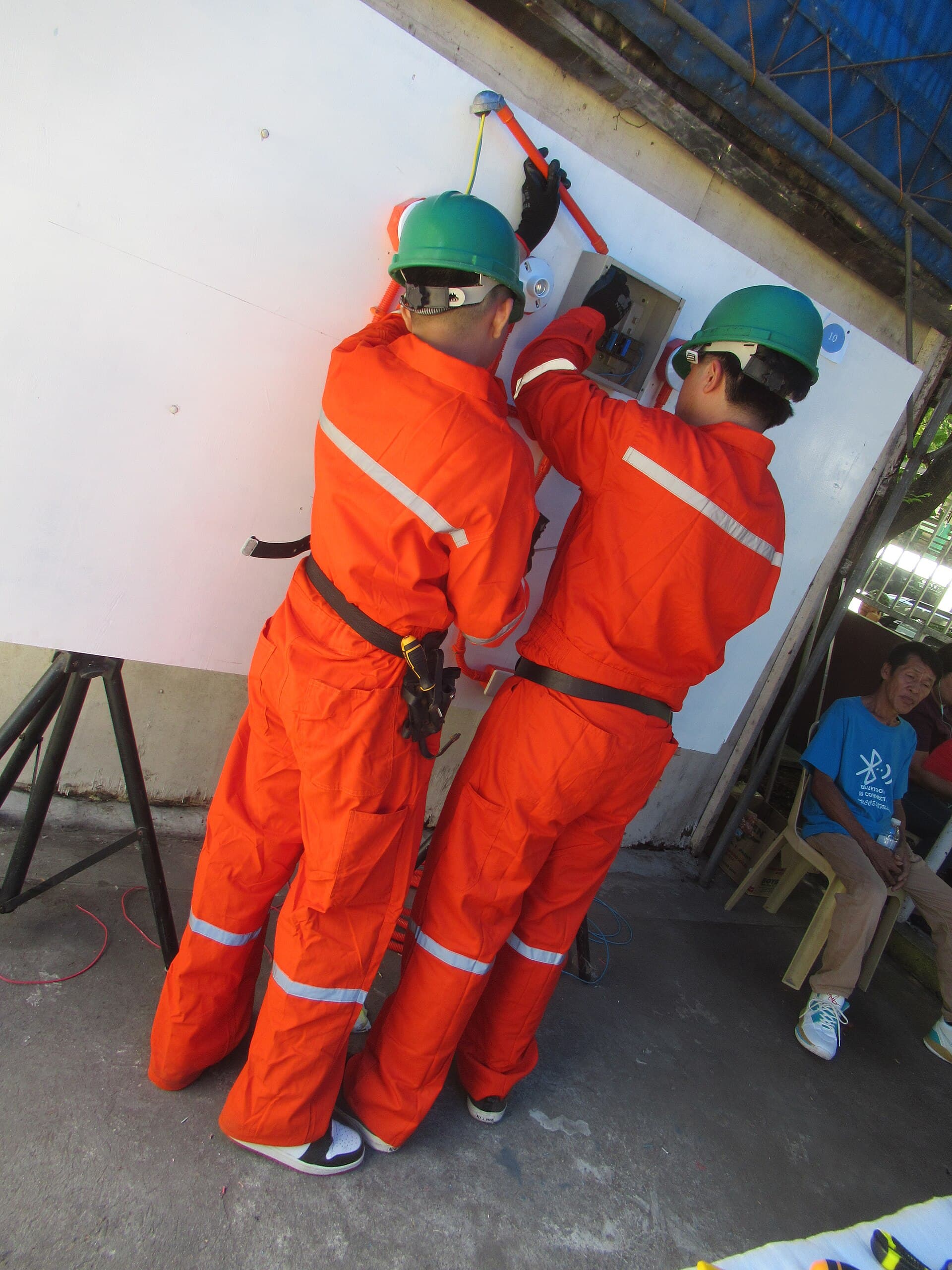
A one-van electrical business is a good shape. Low overhead, a name that is yours, a radius you can drive before the first coffee, and no staff meeting. It is also a shape that hides its costs because the costs are you: the quoting at night, the certificate you have not filed, the Saturday that was meant to be a rest and became a variation, the inbox that never sleeps.
This piece is for the licensed worker who is about to contract, or who already is and can feel the edges. It belongs with the rest of the contracting-business desk. It is not a motivational pamphlet. It is an operating picture.
Contractor licence versus worker ticket
An electrical worker licence says you may do electrical work as a worker. A contractor licence — the name varies: contractor licence, registered electrical contractor, electrical contractor’s licence — says you may offer that work to the public, employ others to do it, or take the legal role of the contracting party. Energy Safe Victoria, the Electrical Safety Office Queensland, NSW Fair Trading, Building and Energy, Consumer and Business Services, and the other regulators each have their own form and their own fit-and-proper test. Some want a supervisor. Some want evidence of insurance. Some want a course in contracting.
Do not invent a national rule. Open the page for the state you will invoice from, and the state you will stand in. They are not always the same.
Working “under” a mate’s contractor number while you find your feet is a conversation that needs to be real: a genuine employment or a genuine subcontract, with their name on the certificate and their insurance in front of the risk. Borrowing a number for your own clients is how two licences get reviewed.
Restricted licences and disconnect-reconnect tickets are not contractor licences. They are narrower still. If that is what you hold, your business is that scope, not “a bit of whatever comes in”.
Read the state-by-state licence piece before you order magnetic signs. The signs are easy. The class of licence is the business.
GST, invoices and the books you cannot keep in your head
The ATO publishes the GST turnover threshold. It moves. Look it up. If you are over it, or you choose to register earlier, your prices and your invoices change. If you stay under, you still need records that would survive a question.
A one-van firm can run on a simple pattern. Every job gets a quote or a written scope. Every job gets an invoice with the right licence number, the ABN, and the certificate number if the state wants it there. Every certificate of compliance is copied to the client and to a folder you can find. Every supplier account is reconciled. BAS, if you are in that system, is not a surprise in the week it is due.
Pay yourself a regular amount, even if it is modest. A business that is “whatever is left in the account on Friday” has no idea whether it is profitable. Superannuation for yourself is easy to skip and expensive to catch up. Workers’ compensation is required the moment you employ anyone, including some contractors depending on the state; it is not required for a genuine sole trader with no workers, and the line is one you should ask an adviser about rather than guess.
Bookkeeping is a weekly hour, not a quarterly panic. If you hate it, pay a bookkeeper. The cost is less than the missed BAS and the unbilled jobs you forgot because they were on a scrap of tape.
Do not mix the fuel card, the groceries and the wholesaler on one account and promise to sort it later. Later is the tax year.
Saying no is a commercial skill
The jobs that wreck a one-van week are predictable.
The client who wants it live.
The renovation you have not seen, priced as a lump sum.
The builder who pays when they are paid, on a job large enough to stop you taking other work.
The after-hours factory that wants a monthly fee and a named person — you — forever.
The mate who needs a “quick look” that is a switchboard.
The interstate job that your licence does not cover.
No is how you keep the licence and the calendar. A written reason is enough: “I do not do live work.” “I cannot lump-sum this until the board is open.” “I do not have a contractor licence in that state.” “I am not available that week.” You do not owe a speech.
Pricing and saying no are the same muscle. If the number that would make the job safe and profitable is a number the client will not wear, the answer is no, not a smaller number.
Learn the work you are bad at, or not yet equipped for, and send it to someone who is. A reputation for sending work away cleanly is worth more than a reputation for having a go.
Geographic radius
A one-van firm has a real range. It is the distance you can travel, do the work, and return without turning the day into a travel business. Past that range, every attendance is a prelim, and every comeback is a loss.
Draw the radius on a map. Inside it, your ordinary rate applies. Outside it, travel is a line. Far outside it, you do not go, unless the job is a planned package with accommodation and a price that assumes you are not available to anyone else that week.
City firms underestimate traffic. Regional firms underestimate the empty kilometres between a town and a farm switchboard. Both underestimate the second visit.
A suburb you are known in is an asset. The radius should include the places where your certificates already live, not only the places where a lead-generation site promised a job.
Reputation in a suburb
Word of mouth in a postcode is still how a lot of domestic and small commercial work moves. It is slow and it is durable. It is also how a sloppy board follows you.
Do the small things that other people remember: turn up when you said; leave the board labelled; send the certificate in the same week; tell the client about the defect you found and did not hide. Do not bag the last electrician to the owner unless you are prepared to put the defect in writing and own the sentence. Most “the last guy was an idiot” stories are incomplete.
Pick up the phone when a previous client has a fault on your work. Warranty is cheaper than a public argument. If it is not your work, say so calmly and offer a priced visit.
Builders talk. So do real-estate agents and the person at the wholesaler counter. A one-van name is easy to recommend and easy to stop recommending. You will not win a suburb with advertising if the last kitchen you left is a mess.
Do not become the cheap person in the suburb. Become the person who is available inside a known radius, who writes a clear quote, and who can be trusted with a key. That is a narrower market. It pays.
When to hire
Hiring is not a reward you give yourself for being busy. It is a change of business.
You need a year of numbers, not a month of overtime. You need work that will still be there when the new person is inducted. You need a supervision plan if they are an apprentice — read the current state supervision rules before you sign a training contract because you are tired. You need the insurance, the contractor-licence conditions, and the award you will pay.
A second licensed worker is the hire that unlocks isolation on larger jobs and sick days that are not a crisis. An apprentice is the hire that unlocks a future, at the cost of teaching. A labourer is the hire that unlocks carrying and chasing, and does not unlock electrical work. Do not blur those three.
The first employee is a payroll, a workers’ compensation policy, a Fair Work obligation, and a person who will watch how you isolate. If your own habits are sloppy, you will teach sloppy. Fix the habits first.
Some one-van firms should stay one-van. That is a legitimate choice. It means saying no more often, not feeling guilty about the size of the business.
Not living in the inbox
The phone and the email will fill every unclaimed minute. Clients expect a tradesperson to answer while they are in a ceiling. You will do it once, then it will become the service.
Set a pattern and tell people. You return calls at lunch and after 3pm. Quotes go out on a stated day. Emergencies — genuine ones, smoke, flood, a person who cannot leave a building — get a different number or a same-day yes/no. Everything else waits.
Turn off the lead-generation notifications that sell you work you already know how to find. They are designed to live in your pocket.
Do not quote from the driver’s seat in a hurry. A bad quote is a longer conversation than a delayed one.
Keep one afternoon a week for certificates, BAS inputs, supplier accounts and the filing you will otherwise do on Sunday. That afternoon is chargeable to the business, not to a client. If you cannot afford it, your rates are wrong.
The van kit should include the documentation as well as the testers. A business that cannot find last month’s certificate is a business that will one day be unable to prove it did the work.
Insurance, theft and the day the van is empty
Public liability is a contractor-licence condition in more than one state and a commercial condition on almost every site. Tools cover is optional until the night the van is opened. Then it is the difference between working on Thursday and borrowing a megger.
Read the policy. Overnight street parking, an unlocked shed, and “tools left at site” are how claims die. A lock, an alarm, a habit of taking the testers inside, and a record of serial numbers are dull. They are also cheaper than a replacement insulation tester and a week off.
Income protection and a plan for a broken wrist are part of a one-person firm. There is no colleague to take the board job. A relationship with another contractor who can pick up isolation-sensitive work is a business continuity plan, even if you never merge.
A one-van operating checklist
- Confirm contractor licensing in every state you will invoice or stand in. Worker tickets are not enough.
- Look up the current ATO GST threshold. Set invoices and prices to match your choice.
- Quote in writing. Invoice in writing. File the certificate in the same week.
- Draw a radius. Travel outside it is a line, or a no.
- Write the jobs you will not take, including live work and unseen lump-sum renovations.
- Return calls on a schedule. Do not let the inbox run the day.
- Keep a weekly hour for the books, even if you pay a bookkeeper to finish them.
- Photograph serial numbers. Insure the tools. Take the testers inside.
- Hire only against a year of work and a supervision plan, not against a tired Thursday.
- Keep a reciprocal arrangement with another licensed contractor for the week you cannot work.
A one-van business is not a lesser firm. It is a firm whose overhead is a person. Treat that person as if they were an employee you were not allowed to exploit. The trade will still be there on Monday if you have slept.
Questions contractors ask
- Is an electrical worker licence enough to take jobs in my own name?
- In most states and territories, contracting — offering electrical work to other people for a fee, in your own right — needs a contractor licence or registration as well as the worker licence. The names differ. The idea does not. Check the electrical safety office that covers you before you print invoices.
- When do I have to register for GST?
- When you meet the Australian Taxation Office’s current turnover threshold, or earlier if you choose. The dollar figure moves and is not printed here as if it were permanent. Look up the ATO. Registering has invoice and pricing consequences; so does remaining under.
- How do I know it is time to hire?
- When you are turning away the kind of work you want, when isolation regularly needs a second licensed person you do not have, or when your books show a year of overtime that is really unbilled admin. Hiring because you are tired on a Thursday is how you employ a problem. Hiring against a year of numbers is how you employ a tradesperson.