Safety & testingUpdated 19 August 202610 min read
Isolation and lockout on Australian electrical sites
Tape on a breaker is not isolation, and neither is a handwritten note under a magnet. This piece walks through prove-dead, personal locks, hasps, group isolation and return-to-service the way AS/NZS 4836 and the model WHS electrical code actually require it on Australian sites.
By Helen Wu
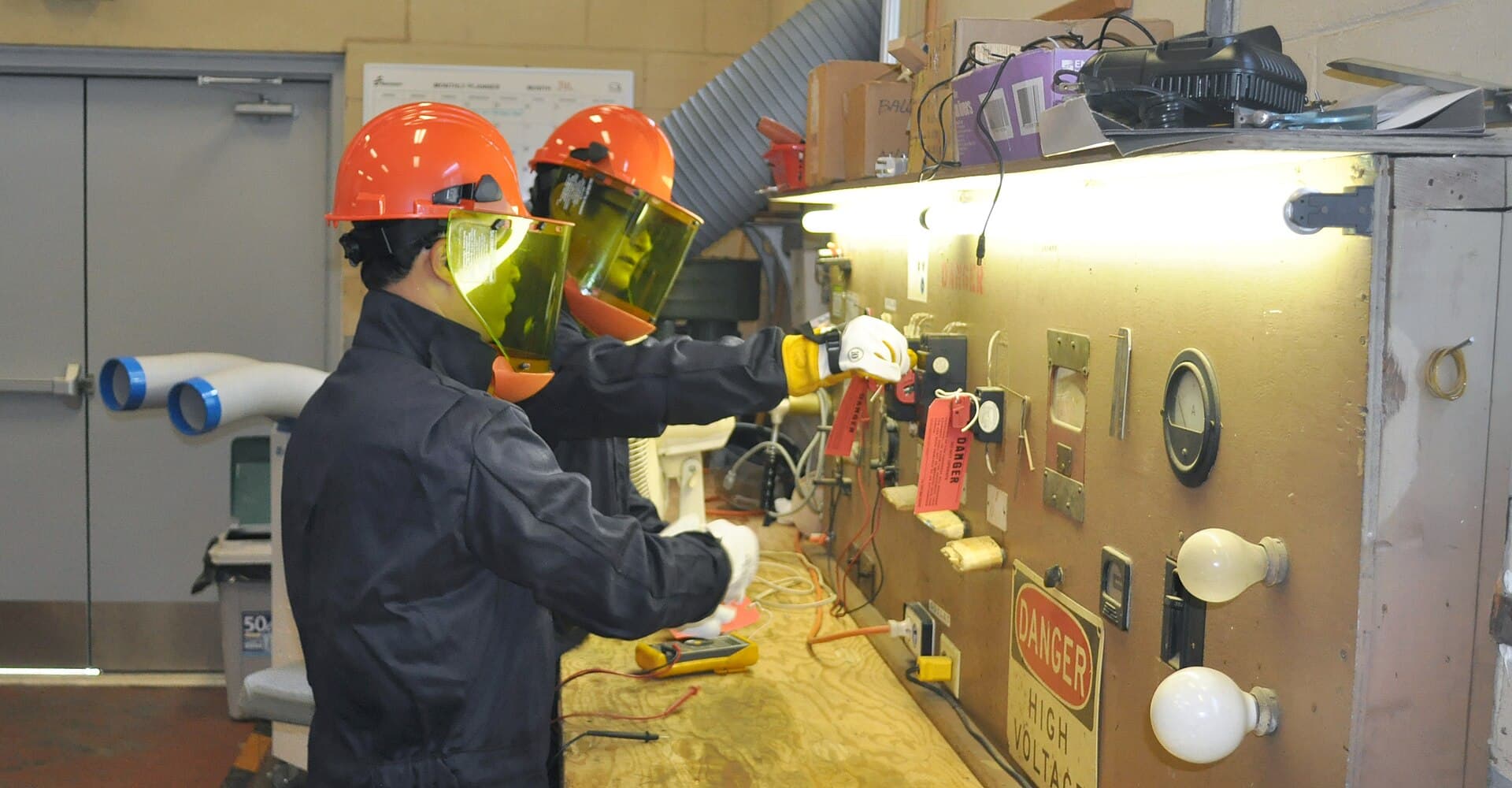
Lockout-tagout is the slogan that arrives on the side of imported padlock kits. The Australian job has a less catchy name and a harder test. You isolate every relevant source of supply, you secure that isolation so it cannot be undone behind your back, you prove the conductors are dead, and you treat them as live until that proof is in your hand. A strip of insulation tape across a circuit-breaker toggle is none of those things. It is a note to yourself that you hope the next person can read.
This is a safety and testing problem before it is a paperwork problem. The Wiring Rules tell you how an installation is to be built. They do not excuse a worker who opens a live bus because someone else "turned it off". Isolation sits in AS/NZS 4836, in the Safe Work Australia model Code of Practice: Managing electrical risks in the workplace, and in the electrical safety legislation of each state and territory. Energy Safe Victoria and the Electrical Safety Office in Queensland both publish guidance that says the same thing in plainer English: de-energise, lock, tag, test, then work.
What isolation actually is
Isolation is the deliberate disconnection of electrical equipment from every source that could energise it, followed by a means of keeping it that way. Opening a switch is the start of the sentence, not the full stop. The model code lists the usual methods: opening switches, removing fuses or links, opening circuit-breakers, racking out withdrawable breakers, or physically removing connections. The method has to match the installation in front of you, not the photograph in a catalogue.
The standard sequence, which you will also find in AS/NZS 4836, is consultation, isolation, securing, tagging, testing, and re-testing when you leave the immediate area and come back. Consultation is not a courtesy call. On an occupied building it is how you find the tenant who has a UPS under the desk and the facilities person who can reset a building-management system from a phone. On a construction site it is how you find out that the "temporary" board you are about to kill also feeds the crane radio and the site office fridge that someone will restore without asking.
Every relevant source means every relevant source. Standby generators, photovoltaic inverters, battery systems, uninterruptible supplies, auxiliary feeds from another board, and control circuits that come from a different origin all count. The 2023 edition of AS/NZS 4836 is explicit that conductors, including the neutral and the earth, are treated as live until proven otherwise, and that stored energy — capacitors in particular — is discharged where it can bite. If the installation is complex, a second competent person should check the isolation procedure. That is not theatre for a principal contractor's audit. It is how you catch the interlock you did not draw.
Prove dead, then touch
Safe Work Australia puts the principle in capitals for a reason: test for dead before you touch. The sequence is mechanical. Test the tester on a known live source. Test the equipment you intend to work on. Test the tester again so you know the instrument did not die between the two readings. Panel voltmeters bolted to a door are not enough on their own. A single-pole neon screwdriver is not a test instrument. A meter with a flat battery, a fused lead you have not checked, or a range left on milliamps is a way of talking yourself onto a live bus.
Prove-dead is not a one-off at 7am. The model code says you test again after an interruption, after a change, and after the area has been left idle. If you walk to the van for a lug and come back ten minutes later, you test again. If another trade has been in the room, you test again. If you isolated yesterday and the job ran overnight, you start the morning as if you had isolated nothing.
You also prove dead at the point of work, not only at the isolation device. A breaker can be open and a conductor still live from another origin. A cable you are about to cut is a special case: identify it, isolate both ends if it can be fed from either, prove dead, and do not trust a colour or a label that was written in 1994. The Wiring Rules tell you how that cable should have been identified when it was installed. Isolation is how you survive the ones that were not.
Personal locks, hasps and the difference between a lock and a label
A tag tells people what you are doing. A lock stops them doing it for you. Where the isolation point can be locked, lock it. Where it cannot, the duty is still to prevent inadvertent re-energisation — remove the handle, withdraw the fuse, rack the breaker, or physically disconnect — and then prove dead. Queensland's Electrical Safety Regulation is blunt about a circuit-breaker that is not under the worker's sole effective control: lock it open, or take other steps so it cannot be accidentally closed, and put a warning sign on it. Energy Safe Victoria and WorkSafe Victoria say the same in their shock-prevention material: a sign without a lock is not a control.
Personal locks are personal. Each person whose body is in the hazard applies their own lock, keeps the key, and removes that lock only when they are clear. A "workshop lock" that lives on a hook and whose key is in the supervisor's car is a group decoration. If four people are on the same isolation, you use a hasp — a multi-lock adaptor — so that the isolation point cannot be restored until the last personal lock comes off. The person who applied the first lock does not get to decide that the others are "nearly finished".
Hasps fail in two boring ways. The first is a hasp that is never put on because the isolation point will not accept it, and nobody walks back to the van for a breaker lock or a fuse-carrier lock. The second is a hasp that is put on with one padlock belonging to the leading hand, while the apprentice works downstream with nothing. Group isolation is not a substitute for personal locks. It is the hardware that lets personal locks share one point.
Group isolation on a large site is a system, not a padlock. The principal contractor or the site electrician isolates the common source, applies a group lock, and controls the keys or the lock-box. Each work party then applies personal locks to the hasp or to the box. Restoration is a counted process: every personal lock off, every work party clear, then the group lock, then a check that nobody has walked back in. If your SWMS cannot describe that sequence in verbs a labourer can follow, it is not a method.
Construction sites are not occupied buildings
A greenfield board is a different animal from a hospital riser, and pretending the same two-line method covers both is how people get hit.
On construction and demolition sites the supply is temporary, the board moves, and the people who operate it change weekly. AS/NZS 3012 sits alongside AS/NZS 4836 here. Construction wiring, transportable structures, generators and hire boards introduce extra origins. A generator that is back-fed through a socket you did not isolate will energise the "dead" board as soon as someone starts it to run a saw. Construction also produces the classic false isolation: a lock on the site main, while a welder has run a lead from the neighbour's supply into the same shed. Consultation on a construction site means asking who else has a cable in the room, not assuming the temporary board is the only source.
Occupied buildings add people who have a legitimate reason to restore supply. Tenants, nurses, cleaners, security, and building-automation systems will all close a breaker that looks "off" if the only signal is a scrap of tape. In a dwelling the risk is often a householder who needs the fridge. In a commercial tower it is a facilities contract that treats an open main switch as an outage ticket. Isolation hardware has to survive that social pressure. A lock that needs a key the householder does not have is not unfriendly. It is the point.
Occupied buildings also hide sources. Rooftop photovoltaic systems, hybrid inverters and battery cabinets can keep a consumer mains or a sub-board alive after the distributor's fuse is out. A UPS will carry a communications rack for long enough to surprise you. A fire-detection or emergency-lighting supply may come from a dedicated origin that nobody wrote on the schedule. WorkSafe Victoria still talks about removing a service fuse as a strong isolation for installation work, and that remains good practice where the distributor's rules and your licence allow it. It is not a substitute for hunting the inverter.
If the work is on the switchboard that contains the isolation device, treat that board as live. Locking the main switch does not de-energise the line side. That is work near exposed live parts, or live work, and it is a different conversation. Isolation of a downstream circuit does not make the board you are standing in front of a dead board.
Why tape on a breaker is not isolation
Tape fails every test the instruments set. It does not disconnect a source. It does not secure the isolation. It does not prove dead. It does not survive a cleaner, a night shift, or a tradesperson who decides the lights need to be on. It is also indistinguishable from the tape that was used last month to mark a faulty breaker, or the tape that means "this one is the air-conditioning". Ambiguous marks on a board are how the wrong circuit gets killed — or, worse, how the right circuit gets restored.
The same goes for a tag that is not attached to a secured isolation point, a photo of an open breaker sent to the group chat, and a verbal "she's off" shouted down a stairwell. Those are communications. They can be part of consultation. They are not isolation.
If the breaker will not accept a lock, say so in the method and change the hardware or the isolation point. Many older boards have toggles that need a specific locking device. Many new boards have lockable handles that nobody bought the hasp for. Buying the correct lock is cheaper than writing an incident report.
Return-to-service is part of the job
Restoration is where isolated work becomes someone else's surprise. The model code has a section on restoring power and another on leaving unfinished work. Both are worth reading in the current instrument rather than from memory.
Before you remove the last lock, walk the point of work. Tools out, covers on or the exposed parts in a state you would accept if a cleaner walked in, other workers clear, and no one still depending on the isolation. Then remove personal locks, then group locks, then restore in the reverse order of isolation. If you isolated a generator interlocking arrangement or a photovoltaic isolator as well as the mains, restore those in the sequence the equipment manufacturer and the site method require. Proving the installation is safe to re-energise is not the same as proving it was dead. Polarity, earth continuity and insulation resistance still sit in the Wiring Rules verification clauses. Isolation does not replace a test before you close in.
If the job is unfinished, do not leave a half-isolated board that looks like a completed isolation. Make the exposed parts safe, leave the locks on if the isolation must hold overnight, and hand over in writing who owns those locks in the morning. A lock whose owner is on a plane is a locked-out building, not a safe system.
Penalties for getting this wrong sit in state and territory electrical safety Acts and in the WHS laws that adopt the model regulations. They move. Do not treat a figure you remember from a toolbox talk as current. Read the instrument that applies to the site, and the regulator's current guidance — Energy Safe Victoria, the Electrical Safety Office, SafeWork NSW, WorkSafe WA's Building and Energy material, or the local equivalent.
Isolation checklist
- Identify the equipment, every energy source, and every isolation point from a current drawing or from a trace, not from a guess.
- Consult the person with management or control of the workplace, and anyone else who might restore supply or who depends on it.
- Isolate all relevant sources, including generation, batteries, UPS, auxiliaries and control supplies.
- Secure the isolation with a lock, a hasp, a withdrawn carrier or an equivalent means that prevents inadvertent re-energisation.
- Apply a danger tag that names the person, the date and the reason. Do not use tape as a lock.
- Each person at risk applies a personal lock and keeps the key.
- Test the tester, prove dead at the point of work, test the tester again. Repeat after any absence.
- Treat the line side of the isolation device, and any unidentified conductor, as live.
- Restore only after a walk-down, then remove personal locks, then group locks, then re-energise in sequence.
- Record the isolation and the tests in the job file or the permit. If the work needed a SWMS, the isolation steps in that SWMS should match what you just did.
Isolation is a craft skill. The padlock kit is only hardware. The method is what you can stand behind when an inspector, a coroner or the person who nearly closed the breaker asks how you knew it was dead.
Questions contractors ask
- Is a danger tag enough if I am the only person on the board?
- No. The model WHS electrical code and AS/NZS 4836 treat tagging as information, not as a lock. If the isolation point can be locked, lock it. If it cannot, take other steps so the circuit cannot be inadvertently re-energised, then prove dead before you touch.
- Do I need a personal lock when the builder already has a group lock on the hasp?
- Yes, if you are the person whose hands will be on the conductors. Group isolation holds the common isolation point. Your personal lock is what proves you are still in the circuit. You remove it only when you are clear.
- Can I isolate at a local isolator and leave the main switch on?
- Sometimes, if that local isolator is the correct device for the equipment, it opens all relevant sources, it can be secured, and you still prove dead at the point of work. A local isolator that does not kill a control supply, a UPS or a photovoltaic backfeed is not isolation.