Safety & testingUpdated 28 July 202611 min read
RCD testing that will still look respectable in the file
A push-button click is not a test record, and a Type AC device is no longer what you put on a new final sub-circuit. This article covers 30 mA socket-outlet protection, Type A versus Type AC, workplace and dwelling duties, and the results you can still defend a year later.
By Tom Rafter
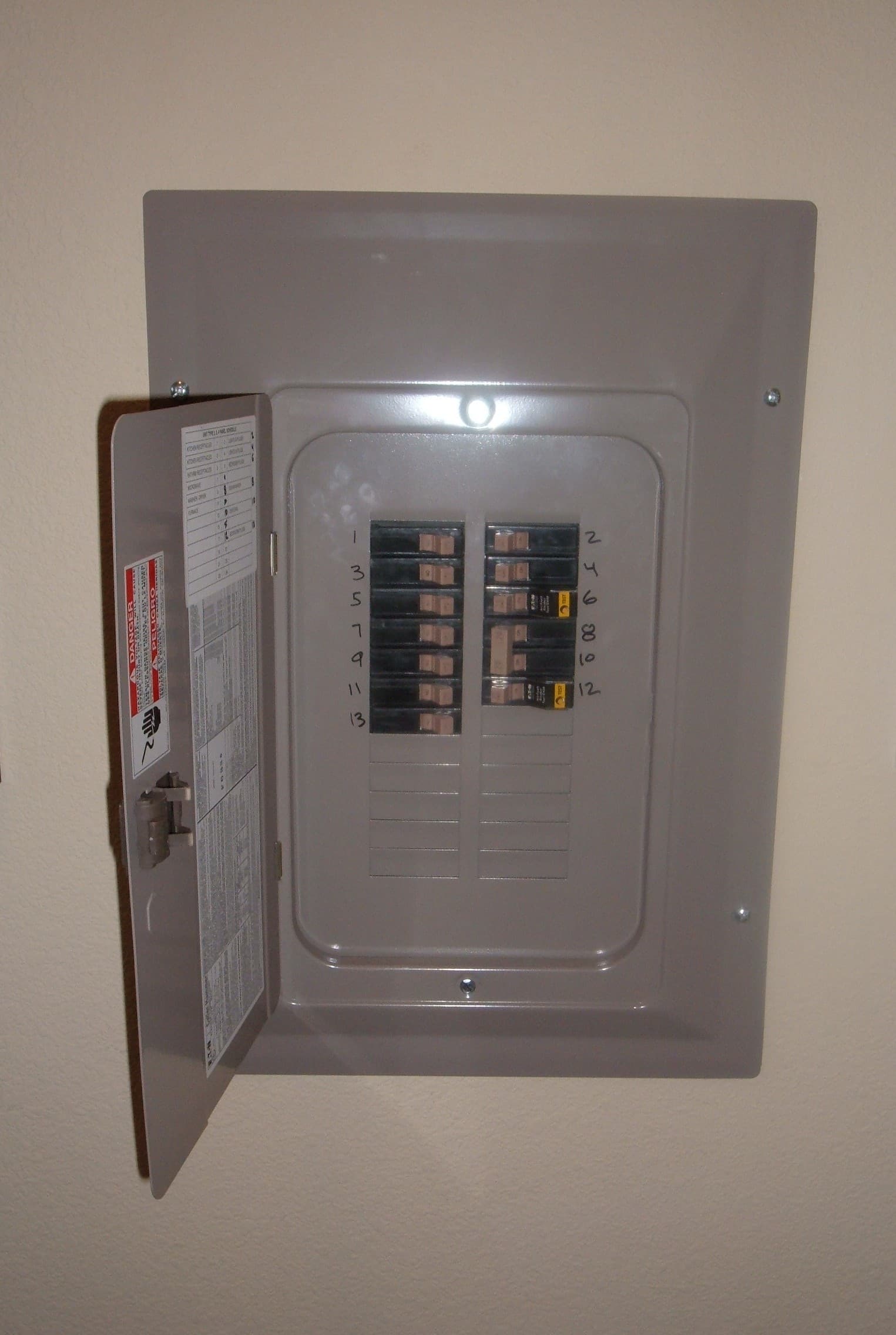
The file is where RCD work goes to die. A contractor trips every breaker on a board, writes "RCDs OK" on the invoice, and two years later nobody can say which device, which test, which instrument or which date. That note will not help you when Energy Safe Victoria asks how the certificate of electrical safety was justified, and it will not help a PCBU when a workplace inspector asks for the residual current device tests required under the model WHS regulations.
Residual current devices are additional protection. They are not a substitute for earthing, they are not a substitute for isolation, and they are not a substitute for the verification tests in AS/NZS 3000. They are the last slice of the cheese when a person becomes the path. Testing them is how you know that slice is still there.
This sits in the safety and testing hub because the install and the in-service regime are different jobs that get collapsed into one lazy sentence. The Wiring Rules tell you where a 30 mA device is required and what type you may fit. AS/NZS 3760 and the WHS electrical code tell you how workplaces keep proving those devices still work. Dwellings are not workplaces, and Queensland is not Victoria. Write the file as if the next reader knows that.
30 mA on socket-outlets is not a vibe
AS/NZS 3000 requires additional protection by a 30 mA RCD on the final sub-circuits that the Rules name — socket-outlets, lighting in many situations, and other circuits that have been pulled into the clause through amendments. Read the current clause, not the version you sat in trade school. Amendment 2 in particular changed both where devices go and what kind of device is acceptable.
The 30 mA figure is the residual operating current for personal protection on those final sub-circuits. It is not a licence to fit a 100 mA or 300 mA time-delayed device on a socket circuit because "the welder keeps tripping it". Selectivity has a place on a main or a distribution circuit. It does not cancel additional protection at the socket. If a tool is nuisance-tripping a 30 mA device, the fault is in the tool, the lead, the environment or the type of RCD — not in the idea of 30 mA.
Construction and demolition sites add AS/NZS 3012 on top of the Wiring Rules. Portable outlets, construction wiring and transportable structures have their own RCD requirements. A hire board that arrives with a device you have not tested is not "already compliant". Test it, or do not plug people into it.
Type A versus Type AC, and why the old stock is a problem
Type AC residual current devices are designed to see sinusoidal alternating residual current. That was a reasonable assumption when the load was a kettle and a fluorescent batten. It is a poor assumption when the load is a switch-mode power supply, a variable-speed drive, an inverter-charger, an EV charger or a photovoltaic inverter. Those loads can put a direct-current component into the residual current. A Type AC device can go blind.
The Electrical Regulatory Authorities Council issued an advisory note, endorsed by the electrical safety regulators, that from 1 May 2023 Type AC devices must not be installed in Australia on new installations, new final sub-circuits, or alterations and additions that now require an RCD. Type A, Type B and Type F remain available. Type A is the ordinary replacement for the old Type AC. Type F and Type B are for particular load signatures — typically where the manufacturer of the equipment or the Rules require them.
That is a purchasing rule as much as a design rule. A device offered online without a Regulatory Compliance Mark or an approval number is not a device you put in an Australian board. The ERAC note says so. Energy Safe Victoria and the other regulators have repeated it. If a wholesaler still has Type AC stock on the shelf, that is their problem, not a reason to fit it.
Existing Type AC devices that were installed, tested and certified before 1 May 2023 do not automatically have to be ripped out of a permanent location. That is the ERAC position. It is still good practice to tell the customer, and it is a poor practice to add a new socket circuit on a Type AC device because "the board is already AC". The new circuit is a new final sub-circuit. Fit the type the current instrument requires.
When you test, the instrument has to match the type. A tester that only injects AC residual current will give a Type A or Type B device a passing grade that does not speak to the waveform the device is there to see. Use a tester that can apply the relevant residual current for the type, and write the type on the record. A result that says "tripped" without a type, a trip current and a time is a story, not a test.
Push-button versus instrument
The test button on the front of an RCD is a mechanical and residual-current check of a sort. It asks whether the device can trip when a test current is created inside it. It does not measure operating time. It does not measure residual operating current. It does not prove the device will see a fault on the load side of a shared neutral, and it does not prove the device was the right type for the circuit. Pressing every button on a board is useful. It is not an instrument test.
Instrument tests — trip time and trip current, sometimes called operating-time and trip-current tests — are what AS/NZS 3760 and the workplace codes mean when they talk about competent-person testing of residual current devices. The tester injects a known residual current and times the disconnection. Results are compared with the limits for that type and rating. You record the device, the circuit, the result, the instrument, the date and the person.
Workplace regimes treat the two tests as a pair with different intervals. The model WHS material and the state codes of practice ask for regular testing of both portable and non-portable RCDs. Queensland's Electrical Safety Regulation sets maximum intervals that vary with the type of work — construction, manufacturing, office, service, amusement — and distinguishes push-button user tests from operating-time tests. Construction is the short end of that stick: portable devices are push-button tested daily or before each use, and instrument-tested on a short cycle. Office work is longer. Those tables move when the regulation is remade. The Electrical Safety Office publishes the current ones. Do not quote a 2013 interval as if it were still the law.
Victoria does not copy the Queensland tables word for word. WorkSafe Victoria and Energy Safe Victoria publish their own workplace and installation guidance. Energy Safe Victoria has a specific problem on new installations that are not yet on supply: you cannot functionally test an RCD without voltage, and a greenfield board often has none. Their guidance has allowed a responsible person to certify with a condition that the devices are tested within a stated period after connection, with that condition noted on the certificate of electrical safety and confirmation left at the switchboard. That is discretion described in a current industry note, not a permanent exemption. Read the note before you rely on it.
Dwellings sit in a different pile. A householder is not a PCBU. The Wiring Rules still required the device to be tested as part of verification when you installed or altered the circuit. In-service push-button tests in a dwelling are good advice — manufacturers and regulators have said so for years — but they are not the WHS testing duty. If you are on a residential job, do the verification tests, show the owner the test button, and do not pretend you have just completed a workplace AS/NZS 3760 regime.
Recording results so the file still makes sense
A respectable record answers the questions an inspector will actually ask. Which device. Which circuit. Which type and rating. What test — push-button, trip current, trip time, or the verification tests required by the Wiring Rules. What result, in numbers. Which instrument, with a way to show it was in calibration if the client or the regulator cares. Who tested, and on what date. What happens next — pass, fail, replaced, deferred because there was no supply.
"RCDs OK" fails every one of those. So does a screenshot of a tester with no circuit identification, and a tag on a portable RCD that does not match the register. For portable devices the record often lives on the tag and in a register; see the testing and tagging field guide for how those two must agree. For fixed devices the record lives in the job file, the logbook at the board, or the client's maintenance system. Put a copy in more than one place if the board is a site you will never see again.
Failed devices come out of service. A workplace RCD that does not trip is unsafe electrical equipment. The model code says it is disconnected until a competent person repairs or tests it and finds it safe. A failed device that is left in with a note to "keep an eye on it" is how a person gets a belt that the file said could not happen.
Common failed installs, and the ones that pass the button
The failures that keep turning up are not exotic.
A Type AC device on a circuit that now feeds an inverter, a charger or a pile of switch-mode loads. The button still clicks. The device may not see the residual current that matters.
A 30 mA device that does not in fact protect the socket in front of you, because the socket was teed off upstream, because a neutral was shared across devices, or because someone "tidied up" the board and landed the outgoing in the wrong RCBO. Polarity and circuit-connection tests exist for this. Skip them and the button still clicks — on a different circuit.
An RCBO with a failed or missing protective earth, or a board where the main earth is a gesture. Residual current devices need a residual current. They do not invent an earth.
A time-delayed 100 mA or 300 mA device used as the only protection on socket-outlets. Selectivity was the excuse. Additional protection was the casualty.
A portable RCD that is tested on the bench and then used on a lead that is damaged, or a portable device that is never instrument-tested because "we hit the button every morning". Daily push-button tests are necessary on construction portable devices. They are not sufficient on their own.
A new board certified without a functional test because supply was not on, and nobody came back. Energy Safe Victoria's discretion only works if the return visit happens and the confirmation is at the board. Otherwise you have a certificate and an untested device.
Counterfeit or unapproved devices bought because they were cheap and had a European marking that is not the RCM. The EESS register exists. Use it.
Relationship to the Wiring Rules, and to everything else
Additional protection in AS/NZS 3000 is a design and verification duty. You fit the right type, in the right place, and you test it as part of the commissioning and certification process that your state electrical safety Act requires. In Victoria that is the certificate of electrical safety under the Electricity Safety Act 1998. In Queensland it is the work under the Electrical Safety Act 2002 and the Electrical Safety Regulation. Other jurisdictions have their own certificates and notices. The names differ. The idea that you test before you sign does not.
In-service testing is a WHS duty on workplaces and a hire-industry duty on hired equipment. It is also, on construction sites, an AS/NZS 3012 duty. It is not a substitute for the install test, and the install test is not a substitute for the next three years of workplace tests.
None of this is a reason to skip isolation. An RCD that trips is a reason to stop and find the fault. It is not a reason to work on a live circuit because "the safety switch will get it". RCDs fail. The isolation article is the method. This article is the proof that the additional protection you installed is still a device, not a decoration.
RCD testing checklist
- Confirm the circuit actually needs additional protection under the current Wiring Rules, and that the device in front of you is the one that provides it.
- Check the type. Do not install Type AC on new work, new final sub-circuits, or alterations that now require an RCD. Prefer Type A unless the load or the Rules require Type F or Type B.
- Confirm the residual operating current. Socket-outlet additional protection is 30 mA, not whatever stopped the nuisance trips.
- Do the verification tests required before you certify: the device operates, the circuit connections are correct, polarity and earth are not a rumour.
- Distinguish push-button tests from instrument tests. Do both when the workplace method or the standard requires both.
- Use an instrument that can test the type you fitted. Record type, rating, trip current, trip time, instrument, person and date.
- On a workplace, file the record where the PCBU can produce it. On a new Victorian installation without supply, follow the current Energy Safe Victoria note — do not invent your own deferral.
- Fail means out of service, replaced or repaired, and retested. It does not mean "OK for now".
- Tell the owner how to use the test button, and that a button test is not an instrument test.
- Check the current state instrument before you quote an interval or a penalty. Those figures move.
A respectable file is dull. It has numbers, types, dates and a name. That is the point. The dramatic document is the one you write after the device that was "OK" did not open.
Questions contractors ask
- Does a monthly push-button test replace an instrument test?
- No. The push-button confirms that the mechanism can trip. An instrument test measures trip current and operating time against the device type. Workplace regimes and AS/NZS 3760 treat them as different jobs. Record both when the method requires both.
- Can I still fit a Type AC RCD if the board already has them?
- Not on a new installation, a new final sub-circuit, or an alteration that now requires an RCD. Electrical Regulatory Authorities Council advice, adopted across the states and territories, is that from 1 May 2023 only Type A, Type B or Type F devices should be installed. Existing Type AC devices that were certified before that date are a different conversation.
- Who has to keep the RCD test records on a workplace?
- The person conducting the business or undertaking that manages the workplace, not the contractor who happened to press the button. If you are engaged to test, give them a record they can file. If you are the contractor on site, keep your own copy. Inspectors ask for both.