Safety & testingUpdated 12 September 202611 min read
Working near live parts: when it is permitted and when it is theatre
Live work is prohibited unless a narrow statutory exception applies, and work near exposed live parts is not a loophole. This article separates installation work from network-operator rules, and explains why PPE is a last control, not a method.
By Helen Wu
There is a style of electrical work that looks like a method and is not one. Someone puts on an arc-rated shirt, stands in front of an open live board, and calls it a risk assessment because a form was ticked in the site shed. That is theatre. The Australian position, in the model WHS regulations and in the state electrical safety laws, is that electrical work on energised equipment is prohibited except in a short list of prescribed circumstances. Work near exposed live parts is a separate, still-regulated activity. Neither of them is the default. Isolation is the default.
AS/NZS 4836 is the standard that contractors actually reach for when they need a procedure for low-voltage and extra-low-voltage work. The Safe Work Australia model Code of Practice: Managing electrical risks in the workplace is the document the WHS inspectors reach for. Energy Safe Victoria writes the same prohibition into the Electricity Safety (General) Regulations. The Electrical Safety Office in Queensland writes it into the Electrical Safety Regulation, and has spent the last few years tightening the "near" language so that people cannot pretend a live board next to their shoulder was someone else's problem. If you hold an electrical licence, those instruments apply to you whether or not a builder has asked for a SWMS.
This is safety and testing work. It is not a debate about toughness.
Live work is not the same as work near exposed live parts
Live work — energised electrical work — is work on the part that is still connected to the supply. You are landing a conductor, replacing a device, or otherwise doing electrical work on equipment that has not been isolated and proven dead. The model code and the state regulations prohibit that work unless one of the prescribed circumstances applies.
Work near exposed live parts is work in a space where energised exposed conductors or parts can be touched or approached, even though the thing you are working on may itself be dead. The classic case is a switchboard whose main switch is locked off while the line side, the incoming tails or an adjacent chassis remains live. Another is a cable tray that runs past an open live board, or a mechanical fit-off in a plant room where a neighbouring circuit was never isolated. The model code has its own section for this. Queensland's Electrical Safety Regulation now talks about work "on or near" in the same division. You do not get to rename the job "not live work" and walk away from the controls.
A third category, which people collapse into the first two, is testing to decide whether equipment is energised. That test is always performed as if the part were live, because that is the point of the test. Queensland has said, in the 2024 amending regulation, that testing of energised equipment — including testing for dead — is a form of energised electrical work and picks up the risk-assessment, SWMS, tools and observer duties. Other jurisdictions have not all used those words. The practice is still the same: you do not treat a prove-dead test as a casual contact.
When it is permitted
The prescribed circumstances are narrow, and they are listed in almost the same words in the model WHS regulations and in the Victorian and Queensland electrical safety regulations:
- it is necessary in the interests of health and safety that the work be done while the equipment is energised — life-saving equipment that cannot be taken down is the example everyone uses, and it is a real example, not a metaphor for a server room that prefers not to reboot
- it is necessary that the equipment be energised for the work to be carried out properly
- it is necessary for testing
- there is no reasonable alternative means of carrying out the work
"The tenant did not want an outage" is not, by itself, a prescribed circumstance. "We always do it live on this site" is not one. "The isolator is in a locked cupboard and the key is with the cleaner" is a reason to get the key, not a reason to work live. "No reasonable alternative" is a test you should be able to explain to an inspector without smiling. If the alternative is to come back at 5am and isolate, that is a reasonable alternative. If the alternative is to isolate a sub-board instead of the whole building, that is a reasonable alternative. Inconvenience is not a statutory exception.
Even when a prescribed circumstance applies, the work does not proceed on a shrug. A competent person conducts and records a risk assessment. The area is clear of obstructions so the worker can get in and get out. The isolation or disconnection point is identified, labelled, clear and capable of being operated quickly — because the first control when live work goes wrong is to switch it off. The person conducting the business or undertaking authorises the work after consulting the person with management or control of the workplace. The work is done by a competent person with tested tools, tested instruments and suitable PPE, in accordance with a safe work method statement. A safety observer is required unless the regulation that applies to the site says otherwise — typically not for certain testing, and not where the recorded risk assessment says the observer would not help.
If you cannot tick those preliminary steps, you do not have permission. You have a wish.
Risk assessment is a site document, not a vibe
AS/NZS 4836 requires an assessment at the work site before work starts, to identify and assess the risks that could cause harm. WorkSafe Victoria has said that preparing a proper SWMS will meet that requirement for construction work. A SWMS that says "electrical hazards — PPE" does not.
A useful assessment names the exposed parts, the voltage, the fault level if it is known, the approach, the escape, the weather, the other people who will walk into the space, the possibility of stored energy, and the reason isolation is not being used. It names the people and their competence. It names the observer if there is one, and what that observer is allowed to do — which is to watch and to stop the job, not to hold the torch and pass tools unless the method says so. It names the isolation point that will be used if the job has to be killed in a hurry.
Competence here is not a feeling. For installation work it is a licensed electrical worker whose licence class covers the work, plus the training and the recent practice to do this job, on this gear, with this instrument. An observer who cannot recognise the moment the worker is in trouble is not an observer. A person who has never opened that type of board is not "familiar with the site" because they drove past it.
Review the assessment when the job changes. A risk assessment written for a dead board does not cover the moment you decide to leave the riser live. That decision is a new job.
No-go situations
Some situations are not close calls. They are stops.
You do not work live, and you do not work near exposed live parts, if you cannot isolate and you also cannot meet the preliminary steps. No clear escape, no identified isolation point, a cramped cupboard that will not let you get your body out, water underfoot, a metal roof in the rain, a board you cannot identify, a voltage or a system you are not licensed for — those are stops.
You do not work live to save time on a housing job. Battery tools exist. Insulation-resistance, continuity, polarity and circuit-connection tests exist, and WorkSafe Victoria has pointed out that they will find most installation faults without the mains. "I needed it on to find the fault" is sometimes true on complex plant. It is rarely true on a lighting circuit in a dwelling.
You do not work near an exposed live bus because the builder wants the temporary lights left on and nobody will isolate the adjacent chassis. Isolate the adjacent chassis, shroud it, or stop. Temporary lighting is not a prescribed circumstance.
You do not send an apprentice to "just take a voltage" on an open live board without a method, an observer where required, and a tester that was checked. Testing is work.
You do not treat a photovoltaic DC run, a battery cabinet or a UPS output as extra-low-voltage folklore. Those systems store energy and can sit at voltages that will kill you after the AC main is off. Isolation of every source is still the method; see the isolation article. If you cannot isolate the DC, you are in a live-work conversation and you need the competence and the method for that system, not a 415 V habit.
You do not work live because the PPE is new. That is the next heading.
Network-operator rules are not installation work
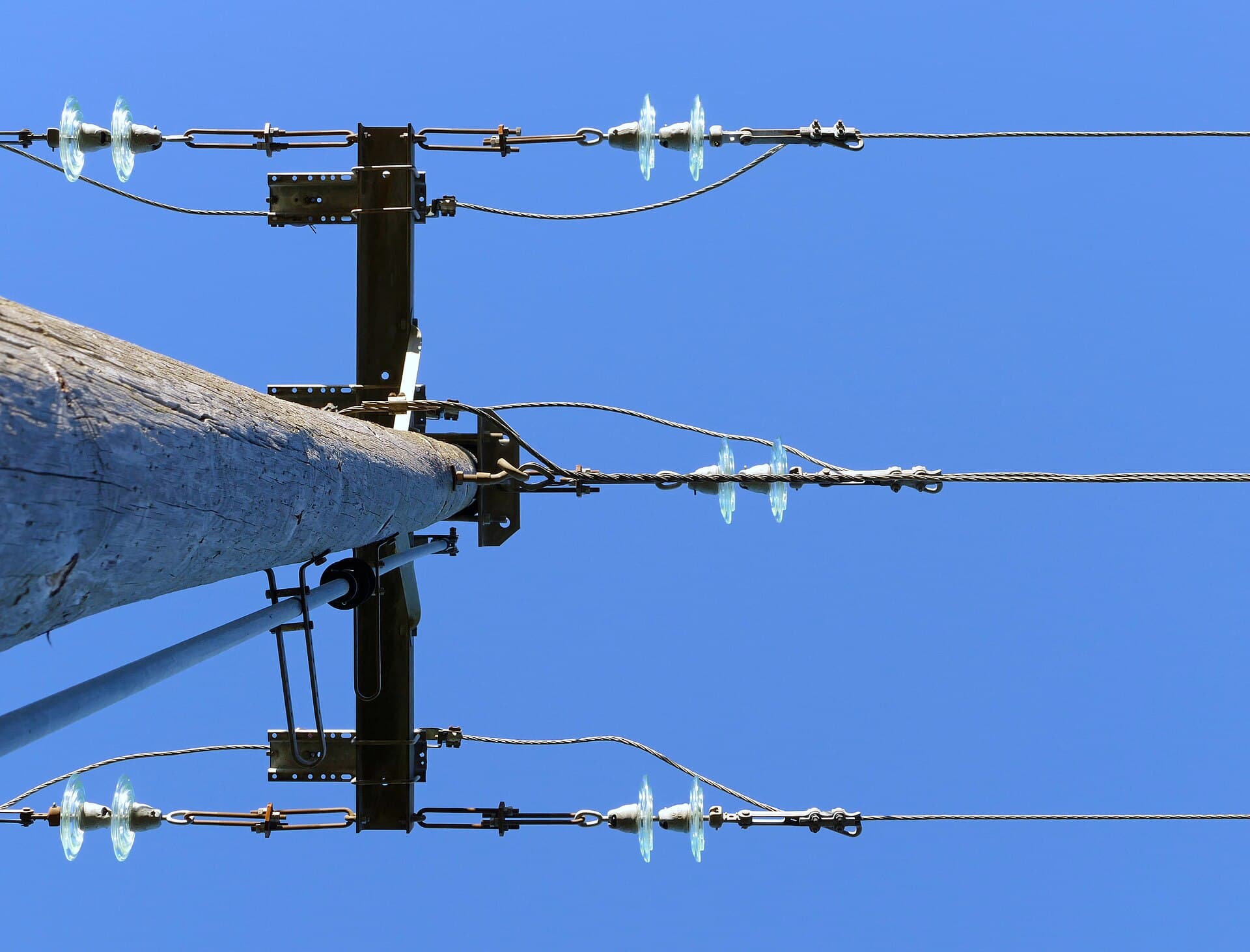
Overhead lines, underground cables, pole-top hardware and the distributor's service equipment sit under a different rule-book. Network operators — the businesses that used to be the county councils and the state commissions — publish approach distances, authorised-person requirements, permit systems and, in some states, a code of practice for work near overhead and underground assets. Safe Work Australia and the state WHS regulators point to those rules. Looking up and live, Before You Dig Australia, and the local distributor's current manual are the starting points, not a memory of the old "tiger tails make it safe" habit.
A licensed electrical contractor who is competent on a switchboard is not, by that fact, an authorised person on a pole. Pole-top work, live-line work and approach to exposed high-voltage parts are trained, authorised, and usually a network or specialist contractor activity. If your job is a service alteration, a temporary builder's supply or a consumer mains that comes close to the distributor's assets, you work under both sets of rules. You do not import a network live-line method onto a domestic board, and you do not import a domestic "she'll be right" onto a pole.
Service fuse removal is a good example of the overlap. WorkSafe Victoria still recommends it as a strong isolation for installation work, done in accordance with Energy Safe Victoria's guidelines. That is isolation of an installation, using a distributor's device, under rules both of those bodies publish. It is not a licence to dress for live-line work and start moving service cable on the weatherhead because you have done boards for twenty years.
If the asset is the distributor's, ask the distributor. If the asset is the installation, isolate it. If you cannot tell the difference, stop and find a drawing.
PPE is not a method
Personal protective equipment is the last control in the WHS hierarchy. It is what you wear because a risk remains after you have tried to eliminate it. Isolation eliminates the electrical risk for the part you have proven dead. Shrouds, barriers and distance reduce the risk from neighbouring live parts. PPE — gloves, arc-rated clothing, eye and face protection, insulating mats — reduces the harm if those controls fail or if you are in a permitted live-work situation.
Putting the PPE on first and then deciding the job is live is reversing the hierarchy. The model code and AS/NZS 4836 both treat clothing and gloves as equipment that must be suitable, tested and maintained. They do not treat them as a permission slip. An arc-rated shirt will not help you if you have no escape, no observer, no isolation point and no reason to be on a live part.
The same is true of insulating tools and testers. They must be the right Category for the work, they must be in test, and they must be used in a method. A Category-rated meter in an open bag under a live bus is a projectile. A glove with a puncture is a conductor. If you cannot show that the kit was looked at this morning, you do not have the kit the regulation describes.
Write the method so that PPE is the last paragraph, not the first. The first paragraph is why the part cannot be isolated. If you cannot write that paragraph, you do not put the gloves on. You isolate.
Theatre, and how to stop performing it
Theatre is a live board opened "just to have a look" during a tender walk. Theatre is a SWMS that lists "live work" as a step on every job so that nobody has to think. Theatre is an observer who is also pulling cables. Theatre is a risk assessment dated last year, for a different board, with a different voltage. Theatre is telling an apprentice that real sparkies work live. Theatre is quoting an American OSHA lockout number as if it were the Wiring Rules.
The cure is dull and it works. Default to isolation. When you cannot isolate, write down which prescribed circumstance you are using, in words you would read aloud in court. Do the preliminary steps. Write a SWMS that a person on the tools can follow. Use people whose licence and training match the job. Treat testing as work. Treat "near" as a regulated place. Take the PPE seriously and do not ask it to do the isolation's job.
Penalties sit in the WHS regulations and in the electrical safety Acts. They are expressed in penalty units, and the value of a unit changes. Do not repeat a dollar figure you heard at a seminar. Open the current instrument for the state you are standing in.
Working near live parts — checklist
- Ask whether the part can be isolated and proven dead. If yes, isolate. Do not negotiate with convenience.
- If you are on or near exposed live parts, name which one it is — live work, work near, or testing — and apply the controls for that activity.
- Check that a prescribed circumstance actually exists. Write it down.
- Record a site risk assessment. Name the parts, the voltage, the escape, the isolation point, the people and their competence.
- Clear the area. Identify the disconnection point. Get authorisation after consulting the person in control of the workplace.
- Write and follow a SWMS. Review it if the job changes.
- Use a safety observer where the regulation and the assessment require one. Give that person the authority to stop the job.
- Keep network-operator rules for network assets, and installation rules for installations. Use both when the job touches both.
- Put PPE, insulating tools and testers at the end of the hierarchy. Inspect them. Do not use them as permission.
- Stop when the cupboard, the weather, the licence class or the unidentified conductor says stop.
The respectable live job is rare, short, written down and finished. Everything else is a job that should have been isolated, and a story you will not want to tell twice.
Questions contractors ask
- Is testing for dead counted as live work?
- Yes, in the sense that you are using a tester on something that may still be energised. Queensland has said so in recent Electrical Safety Regulation amendments. You still isolate first wherever you can. The test itself is controlled as energised work — competent person, suitable instrument, method — not as a casual poke.
- If I am only working near a live board, not on it, do I need a SWMS?
- If the work is construction work on or near energised electrical installations or services, the model WHS regulations treat it as high-risk construction work. That is a SWMS trigger. "Near" is not a free pass. If you can isolate, isolate.
- Do network approach-distance rules apply on a domestic switchboard?
- No. Distributor and network-operator rules govern work near their assets — overhead lines, underground cables, service equipment they own. Installation work on the customer's installation is under the electrical safety Act, the Wiring Rules and WHS. Do not mix the two rule-books, and do not ignore either when both apply.