Solar & renewablesUpdated 17 June 20268 min read
Rooftop solar: the contractor's job after the panels go on
The array is the visible part of a solar job. Isolation, labelling, switchboard capacity, earthing, CEC paperwork and a handover pack are the part that remains when the sales company has changed its phone number. This article is for the licence holder who still owns the defects.
By Daniel Okonkwo
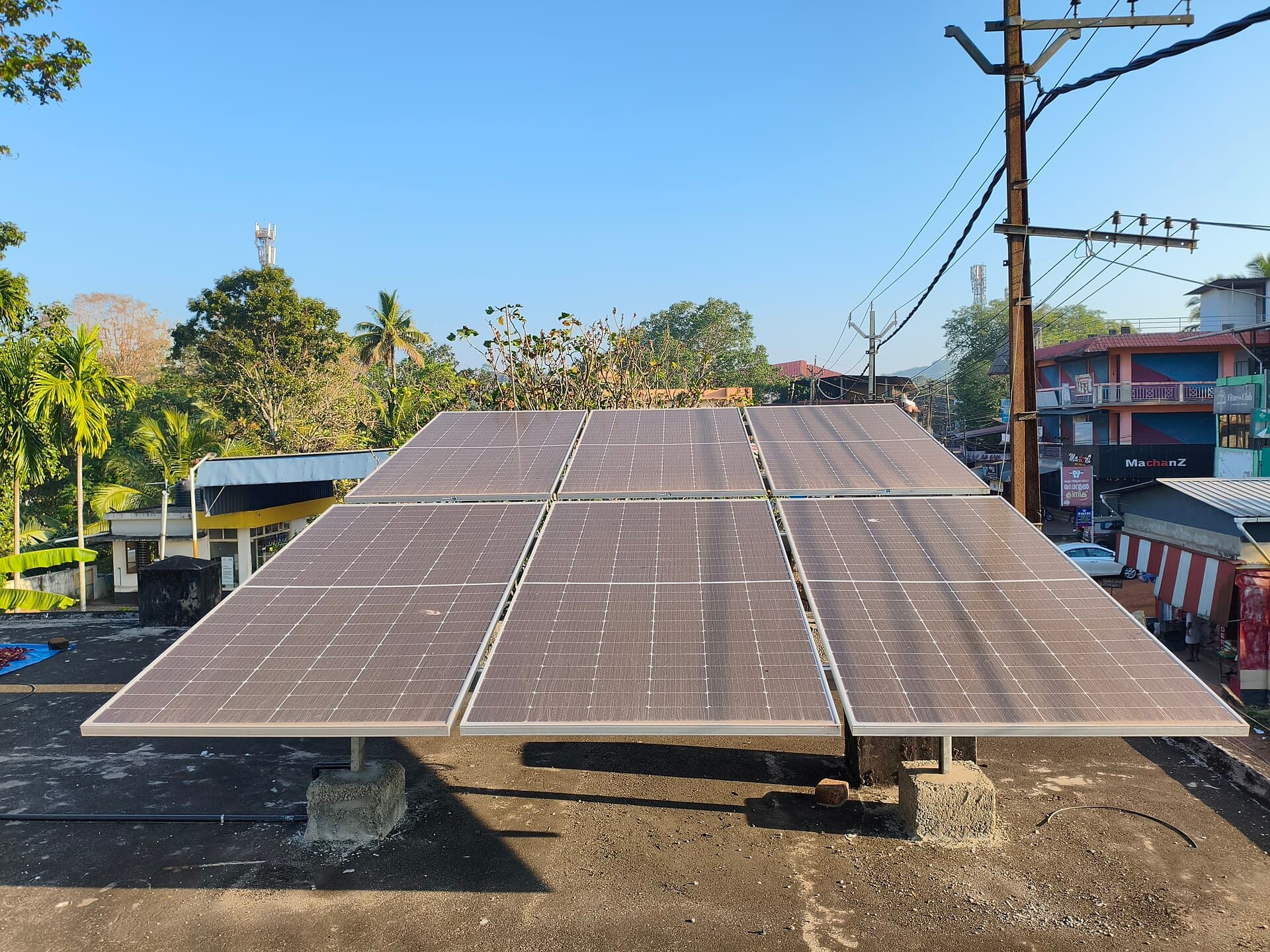
Rooftop solar is sold as panels. It is installed as an electrical generation system attached to someone else's house. The solar and renewables contractor who only thinks about the array will meet the inspector at the switchboard, where the isolation is missing, the busbar is tired, and the labels were going to be printed next week.
This article starts after the rails are down. The panels matter — roof penetrations, cable management, wind region, manufacturer clips — but the licence holder's job is not finished when the last module clicks in. Isolation, labelling, switchboard capacity, earthing, the split between Clean Energy Council accreditation and the electrical licence, and a handover pack that still works when the sales company disappears are the work that remains.
Do not skip earthing, residual-current protection or certification to "get them generating before the rebate window". Rebate dollar figures change and we will not invent them. The installation either complies or it does not.
Isolation is a sequence, not a sticker
DC-rated, adjacent, and in an order someone else can follow
A grid-connect PV system needs a shutdown sequence a firefighter, an owner and the next electrician can follow under stress. DC isolation at the array and at the inverter, AC isolation of the inverter, and a main switch (inverter supply) at the switchboard are the usual bones. The current AS/NZS 4777 and PV array installation standards, the Wiring Rules, and the manufacturer's instructions decide the exact devices. Your job is to fit what those documents require, not a single rotary switch that "kills the solar" while a DC string remains live on the roof.
Lockable, labelled, adjacent where the standard requires adjacent. An isolator on the opposite side of the house from the inverter because the wall was prettier is not adjacent. An isolator installed upsidedown so water sits on the seal is not an isolator after the second summer. DC rated means DC rated. An AC switch on a DC string is a documented way to grow an arc.
If the system includes a battery, isolation grows. You now have a source that can feed the house when the grid is dead and a source that can feed the inverter when the array is isolated. Label the sequence for the system you installed, not for the last hybrid you did in a different suburb. Do not improvise a backup bar from a PV-only shutdown poster.
Labelling is part of the installation
Generation labels, shutdown procedures, PV isolator labels, "multiple supplies" warnings, and a circuit schedule that names the inverter are not a stationery afterthought. Fire and rescue, the DNSP and the next contractor use them. Missing labels are one of the defects that keep turning up on solar compliance inspections.
Print durable labels. Stick them where the standard and the CEC guidance expect them: meter box, main board, inverter, isolators, and any remote shutdown. If the house has an old meter panel and a new distribution board, both need to tell the truth about generation. A beautiful label at the inverter and a 1982 fuse schedule at the board is how someone isolates the wrong thing.
Do not use a marker on tape. Do not leave CEC and DNSP paperwork as a substitute for field labels. Do not copy a shutdown poster from another brand of inverter.
Switchboard capacity is often the real job
Old Australian boards were not designed as generation hubs. Adding an inverter to a rewirable fuse box, a crowded 1960s chassis, or a meter panel that is already the MEN point is how a solar job becomes a board upgrade. Busbar current, fault levels, space for a lockable main switch (inverter supply), RCD arrangements that still make sense with an inverter, and the service fuse are all in play.
Maximum demand is no longer a one-way calculation. You are adding a source. You must not overload the busbar or the consumer mains in either direction. If the board cannot take the generation connection lawfully, you say so in the quote before the panels are on the truck. An inverter beside a dead fuse box is not a complete installation.
Talk to the DNSP. Export limits, meter types, isolation devices and application processes differ between Energex and Western Power, between Ausgrid and SAPN. The sales proposal's "approved for your area" sentence is not a network offer.
Earthing the array is not a green cable to a rail
Module frames, mounting systems and inverters have earthing and bonding instructions. Follow them. Follow AS/NZS 3000 for the installation earthing system. The array earth must arrive at a point that is part of the installation's earthing system, not a convenient roof screw and not a second unofficial electrode that never meets the MEN.
Roofing that is already earthed, Colorbond, tiled roofs with sarking, and rail systems that rely on listed bonding jumpers are all different. Do not assume the rail bonds itself because it is metal. Do not drill an unidentified switchboard backing to land an earth — that backing may be asbestos, as discussed in switchboard upgrades. Do not leave painted joints as the only earth path.
Test continuity from frames to the earthing system. A generation system with a floating array frame is a shock waiting for a damaged DC cable. Equip the job with the lugs and jumpers the rail brand specifies. Improvised self-tappers through paint are how inspections fail.
CEC accreditation and the electrical licence are different documents
The Clean Energy Council runs an accreditation scheme for designers and installers of designated renewable-energy systems. Distributors, retailers and incentive programs often require a current CEC credential on the job. That credential is not an electrical licence. It does not authorise you to run circuits in Queensland if your licence is Victorian. It does not authorise a restricted licence holder to build a switchboard.
The electrical licence is issued under state and territory law. Electrical work — wiring, switchboards, isolation, testing, certification — sits on that licence. For a plain-language split of the scheme rules, see CEC accreditation explained. The practical rule on site: the person who signs the electrical certificate must be authorised to do that electrical work, and the person who claims the CEC install must hold the relevant accreditation. Sometimes that is the same person. Sometimes it is a licensed electrician and a CEC-accredited supervisor who were actually on the roof. Paper that says they were, when they were not, is a defect.
Restricted electrical licences (disconnect-reconnect and similar) do not cover PV string work, inverter AC connections, or switchboard alterations. Do not send a restricted licence holder to "just land the AC".
The handover pack is the job after the job
When the sales company disappears — and sales companies do disappear — the owner has whatever you left them. Leave enough.
- Electrical certificate of compliance for the state or territory.
- CEC or scheme documentation that matches the serial numbers on site.
- Inverter and module serials, photographed.
- As-built string diagram and roof layout.
- Shutdown procedure that matches the labels.
- Test results: insulation, polarity, earth continuity, RCD, commissioning data from the inverter.
- Manufacturer warranties and the installer's defects liability in plain sentences.
- DNSP application or approval references.
- A circuit schedule that includes generation.
- Photographs of the existing board before you started and the as-built board after.
Do not hand over a USB full of generic PDFs and a fridge magnet. Do not leave the owner with an app login and no isolator explanation. Walk them to the shutdown labels and make them point to the main switch (inverter supply). If they cannot isolate the system, the handover failed.
Who owns defects after the sales company disappears
You do. The electrical work you certified does not become ownerless because the lead generator went into administration. Missing DC isolators, mixed-brand connectors, undocumented batteries added "as an extra", roof leaks at penetrations you made, and a generation connection on an unsafe board remain your problem. Civil recovery against a vanished retailer is a lawyer's job. Making the installation safe is yours if you are still the certifier they can find.
If you subcontracted, your contract with the sales house does not bind the regulator. If you only did the AC and someone else did the DC, your certificate must say so, and you should not have energised a DC system you could not see. "Not my side" is a weak sentence when the system is live as a whole.
If you are asked to take over an orphan system, inspect it as if it were new. Do not recertify a photograph. Open isolators, check connectors, check the board, check earthing, check labels. Price the defects before you put your licence on a stranger's array.
What you refuse
- Energising without DC and AC isolation in the required locations.
- Connecting generation to a board that cannot carry it.
- Skipping array earthing or faking continuity through paint.
- Using AC-rated switches on DC.
- Leaving labels for "the office to post".
- Signing CEC or electrical paperwork for work you did not supervise.
- Installing on an asbestos meter panel by drilling it.
- Adding a battery later without treating it as a new design.
- Inventing a rebate figure to close the sale.
Job-site checklist
- Confirm electrical licence class, CEC accreditation (if the job claims it), and DNSP application status before panels go up.
- Assess the switchboard, MEN, consumer mains and service arrangement as a generation connection, not as a wall for an inverter.
- Fit DC and AC isolation that matches the current standards and the manufacturer's instructions. Use DC-rated devices on DC.
- Earth and bond the array as specified. Test continuity to the installation earthing system.
- Label shutdown, isolators, generation and the circuit schedule with durable matching words.
- Commission the inverter, set any export limit the network offered, and record the settings.
- Photograph serials, roof penetrations, cable management, isolators and the as-built board.
- Assemble a handover pack the owner can use if the sales company vanishes.
- Walk the owner through isolation. Do not leave until they can point to the switches.
- Lodge certificates. Keep a copy that is not only on the sales company's portal.
The panels will photograph well. The contractor's job is the part that does not: a sequence that kills the system, a board that can carry it, an earth that exists, and a pack of paper that still tells the truth in five years. Do that part and the array is allowed to be the pretty bit.
Questions contractors ask
- Does CEC accreditation replace an electrical licence for rooftop PV?
- No. Clean Energy Council accreditation is a scheme competency for design and installation of designated renewable systems. The electrical licence issued by the state or territory is what authorises electrical work. Most grid-connect jobs need both. Accreditation is not a licence.
- Who owns a defect if the sales company has disappeared?
- The person who performed and certified the electrical work still owns that work. A vanished retailer does not cancel a certificate of compliance, a missing isolator or an unlabelled shutdown. Warranty administration may be messy. Safety defects remain yours.
- Can I leave the old fuse board if the inverter fits on the wall beside it?
- Only if the board can accept the generation connection, isolation, protection and labelling required by the Wiring Rules and the inverter installation standards. An inverter next to an overloaded porcelain board is a switchboard job. See the companion pieces on boards and PV.